


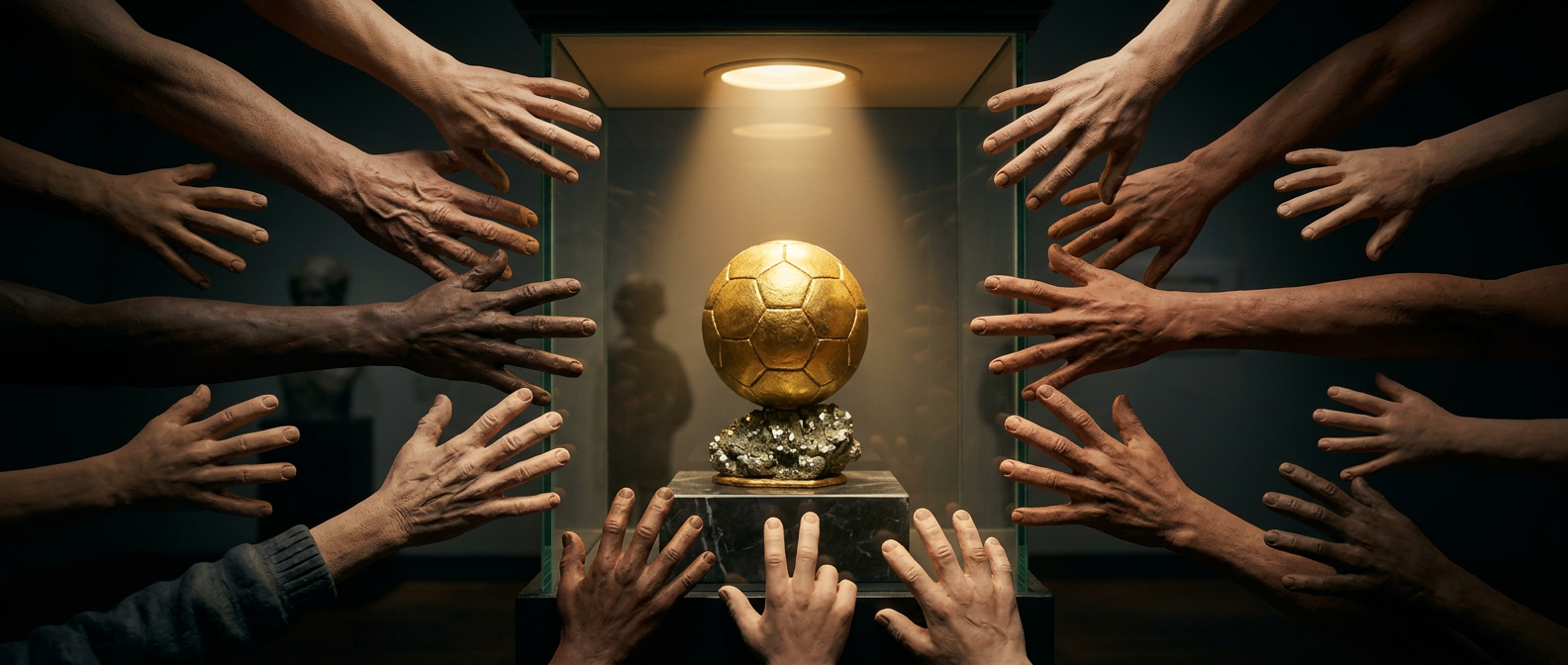
Harry Kane was 33 years old when he won the football Ballon d’Or, making him the latest in a quiet pattern the game has stopped hiding.
Luka Modric was 33 when he won his in 2018. Karim Benzema was 34 when he won in 2022. And now Kane, at 33, ends England’s 25-year wait for the award at an age when most players are already winding down.
There is a pattern here. It is worth paying attention to.
The players who had to wait
For most of the 2000s and 2010s, the Ballon d’Or was a two-man conversation. Messi and Ronaldo won 12 of the 14 awards between 2008 and 2022. They were so dominant from their mid-20s through their early 30s that they warped our perception of when a footballer should peak.
We started expecting greatness to arrive at 21 and stay forever.
But even Messi and Ronaldo were not winning it at 19. They won it at 26, 27, 28, when experience and physical peak overlapped. The myth of the teenage superstar taking the world’s biggest individual prize was always more cultural than factual.
Now that era is over, the truth is clearer. The football Ballon d’Or increasingly goes to players who reward patience, experience, reading of the game, and the composure that only comes from failing at something important and surviving it.
Look at Ousmane Dembele. He is 29. He has been a professional since he was 17. Twelve years on the scene. Most people have revised their opinion of him at least three times. He became the best version of himself at PSG, technically in his late 20s, but it feels longer because we watched him grow up in real time since 2016. He is proof that the long road leads somewhere real.
What the game is actually rewarding now
The game is faster, more tactical, and more demanding than it has ever been. Young players arrive earlier — Yamal at 16, Endrick at 18, Bellingham appearing to fully mature at 20. But arriving and sustaining are different things.
Modric did not become great at 33. He had been one of the best midfielders in the world for a decade. In 2018 he finally had the season, nobody could argue with a Champions League winner, and World Cup finalist, the man who proved Croatia could compete with anyone.
Benzema waited longer. Fourteen years at Real Madrid, and the award only came when he led them to the Champions League in 2022. He was 34.
Kane’s arc is the most dramatic. Eighteen years as a professional. No trophies until he was 31. 280 goals at Tottenham and nothing on a shelf. The move to Bayern looked like the boldest decision of his career or an admission that time was running out. Then he scored 73 goals last season. Seventy-three.
The award was not a consolation prize. It recognized him as the best footballer on the planet last year.
Whether this is permanent is hard to say. Yamal is 19 and the case for him winning this in the next two or three years is strong. But the idea that youth alone is enough, that being 22 and brilliant should be sufficient is being quietly retired.
The football Ballon d’Or increasingly goes to players who have been tested, who lost something important, who found a way back. Kane losing finals. Modric watching Messi and Ronaldo take the award for a decade. Benzema spending years in the shadow of a scandal that nearly ended his international career.
They were all, at various points, written off.


